
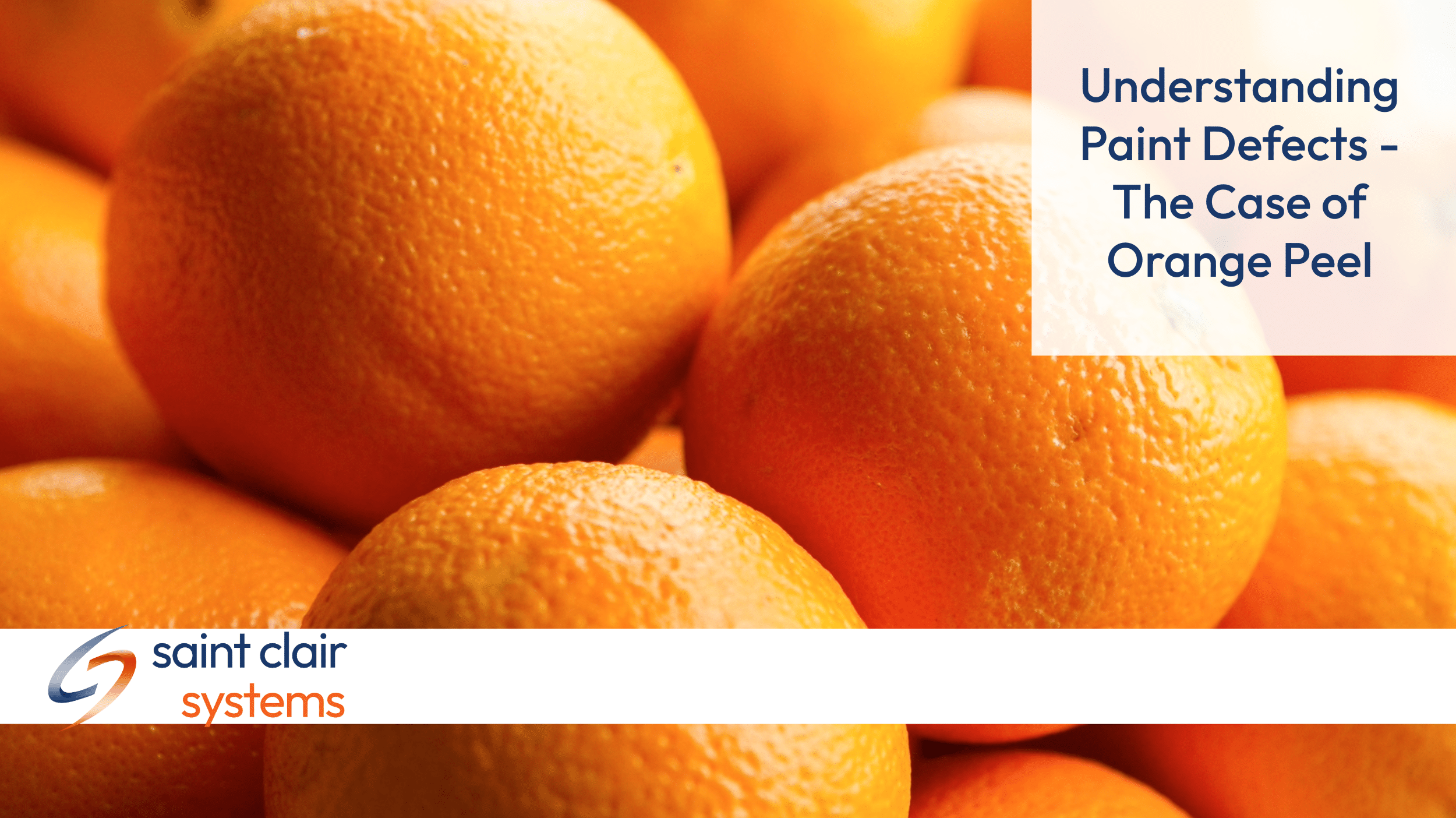

Paint defects can significantly affect the aesthetic and functional qualities of a coating. One common defect that often raises concerns in the industry is orange peel, named for its resemblance to the textured skin of an orange. Understanding the causes of orange peel is essential for optimizing paint application processes and achieving a smooth finish. In this blog post, we’ll explore some of the mechanisms behind orange peel, specifically its relationship to viscosity and solvent addition, and how to avoid it.
What Causes Orange Peel?
The Role of Viscosity
Orange peel often occurs when the viscosity of the paint is too high. When the viscosity is elevated, the tiny droplets of paint fail to coalesce properly, preventing them from flowing out into a smooth film. Instead, they create high and low spots on the surface, resulting in the characteristic texture of orange peel.
Think of it this way: when paint droplets land on a surface, surface tension pulls them together, much like how two water droplets merge. If the viscosity is too high, this merging doesn’t happen effectively, leading to the uneven texture associated with orange peel.
The Impact of Solvent Addition
It is common for solvents to be added to paint to reduce its viscosity and improve its flow characteristics. However, the process of curing paint—whether solvent-borne or water-borne—requires the evaporation of ALL of these solvents. When the paint is applied, the solvent must escape to allow the film to cure properly.
As the solvent evaporates it moves upward through the paint film, disturbing the paint molecules, causing them to move around and create texture. The degree is directly related to the amount of solvent added to the paint. In the case of low environmental temperatures, when extra solvent may be added to attain the desired viscosity and flow out.
This phenomenon can lead to a range of defects, from a subtle change in gloss to more pronounced orange peel to blister formation – all related to the volume of solvent added to the paint.
Understanding the Solvent Continuum

The relationship between solvent addition and paint defects can be visualized on a continuum:
- Dry Spray: This defect occurs when the paint contains too little solvent and the droplets lose too much solvent before reaching the surface. In extreme cases, the droplets can arrive at the surface as “sticky balls” instead of fluid droplets, preventing proper film formation and resulting in a rough, uneven finish.
- Optimal: This is the ideal balance of solvent and paint and assures optimal atomization that produces particles with the perfect viscosity to join together to form the perfect film that produces excellent adhesion and protection of the underlying substrate with a smooth high-gloss appearance with no orange peel.
- Gloss Issues: This is the initial stage where the surface begins to lose its sheen due to uneven evaporation or application.
- Orange Peel: As solvent concentration increases and evaporation fails to keep up, the texture becomes more pronounced.
- Blistering: At this stage, trapped solvents create bubbles under the surface, leading to visible blisters. This can be nearly invisible but cause adhesion defects that fail cross-hatch testing and can result in warranty issues.
- Solvent Pop: The most extreme manifestation occurs when blisters burst, resulting in a visible defect.
Strategies to Prevent Orange Peel
- Optimize Viscosity: Always aim for an ideal viscosity that allows for proper droplet coalescence. Utilize continuous, real-time viscosity monitoring to ensure your paint falls within the proven range necessary to provide acceptable outcomes from your paint process.
- Control Solvent Addition: Use the minimum amount of solvent necessary to achieve the desired viscosity. Over-reliance on solvents can lead to complications during the application and curing processes.
- Temperature Management: Heating the paint can help control viscosity without excessive solvent addition. However, be cautious—too much heat can accelerate solvent evaporation, leading to defects. Finding the “sweet spot” is key (remember Goldilocks) and cooling is often as important as heating to maintain that perfect temperature.
- Application Technique: Employ proper spray techniques to ensure even coverage and minimize the risk of creating dry spray or uneven films. Adjusting atomization settings can also improve droplet size and flow.
- Environment Considerations: Monitor, and if possible, control environmental factors such as humidity and temperature during application, as these can significantly impact solvent evaporation and paint behavior.
Conclusion
Understanding the mechanisms behind orange peel and other paint defects is crucial for professionals in the coating industry. By optimizing viscosity, carefully managing solvent use, and controlling application techniques, it is possible to achieve a smooth, defect-free finish. As we move forward, continuous education and awareness of these factors will be vital in enhancing quality and performance in paint applications.
By addressing these issues proactively, we can minimize defects and deliver high-quality finishes that meet both aesthetic and functional standards, independent of changes in the environment from day-to-night and season-to-season.
Helpful Links & Resources