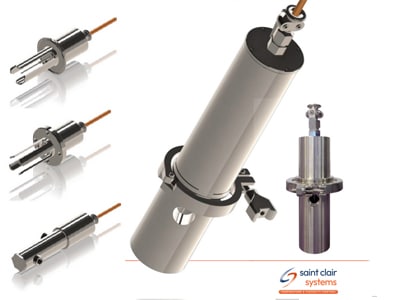
Before you explore, we would like to help define what we mean when we refer to Temperature Control and when we refer to Viscosity Control.

Temperature Control
Senses Material Temperature
Controls Material Viscosity by Adjusting Temperature

Viscosity Control
Senses Material Viscosity
Controls Material Viscosity by Adjusting Solvent Ratio
Both options control material viscosity.
Both options work with a wide range of paints and coatings.
Both are represented in the content below.
We can help determine what to consider for your specific application.

Paint Defects
Troubleshooting Guide
For all the advances made in the paint process, things are not always perfect. Defects happen in paint jobs, which means lost time, money and business.
Use this Paint Troubleshooting Guide to help prevent paint problems before they disrupt production.

How We Work
This is a summary of how we like to work.
- Discuss whether what we can do will help you.
- Talk about what it will cost. We like to get this over with early.
- Outline ways we can help make sure you don’t make a decision you will regret.

Evaluating Viscosity Automation
Sometimes it makes sense to evaluate whether Automated Viscosity Control is a good idea for you. This document provides guidelines to help you make that determination.
Real World Cases. Real World Solutions.
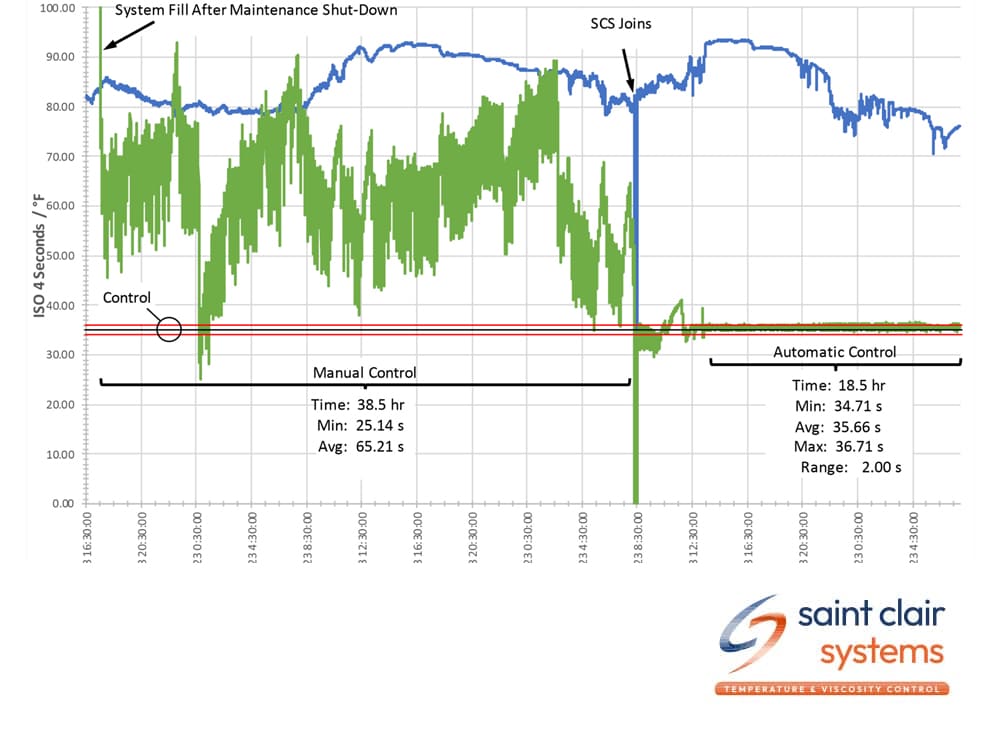
Saint Clair Systems creates tailored solutions using point-of-application viscosity control technology on any fluid dispense system. Here are a few case studies highlighting the real-world benefits of effective temperature and viscosity control.


See What We Mean.
These illustrate some of the common questions we get about viscosity, why it changes, and how our systems control it.

Is Stable Plant Temperature Enough?
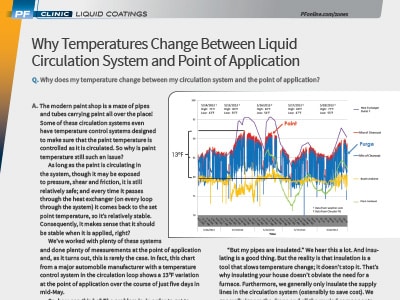
Stable plant temperature is a "nice to have" when it comes to automated disepnsing applications. Unfortunately, it doesn't always guarantee consistent output. This diagram shows a typical paint application and all of the places where your coating can change temperature and ultimately viscosity.

How Does a Viscosity Control System Work?
This diagram shows how a viscosity control system works. The Sensor reads the material viscosity and sends a signal to the controller. The controller signals the appropiate valve (solvent or virgin material), to open as required to maintain a consistent viscosity.
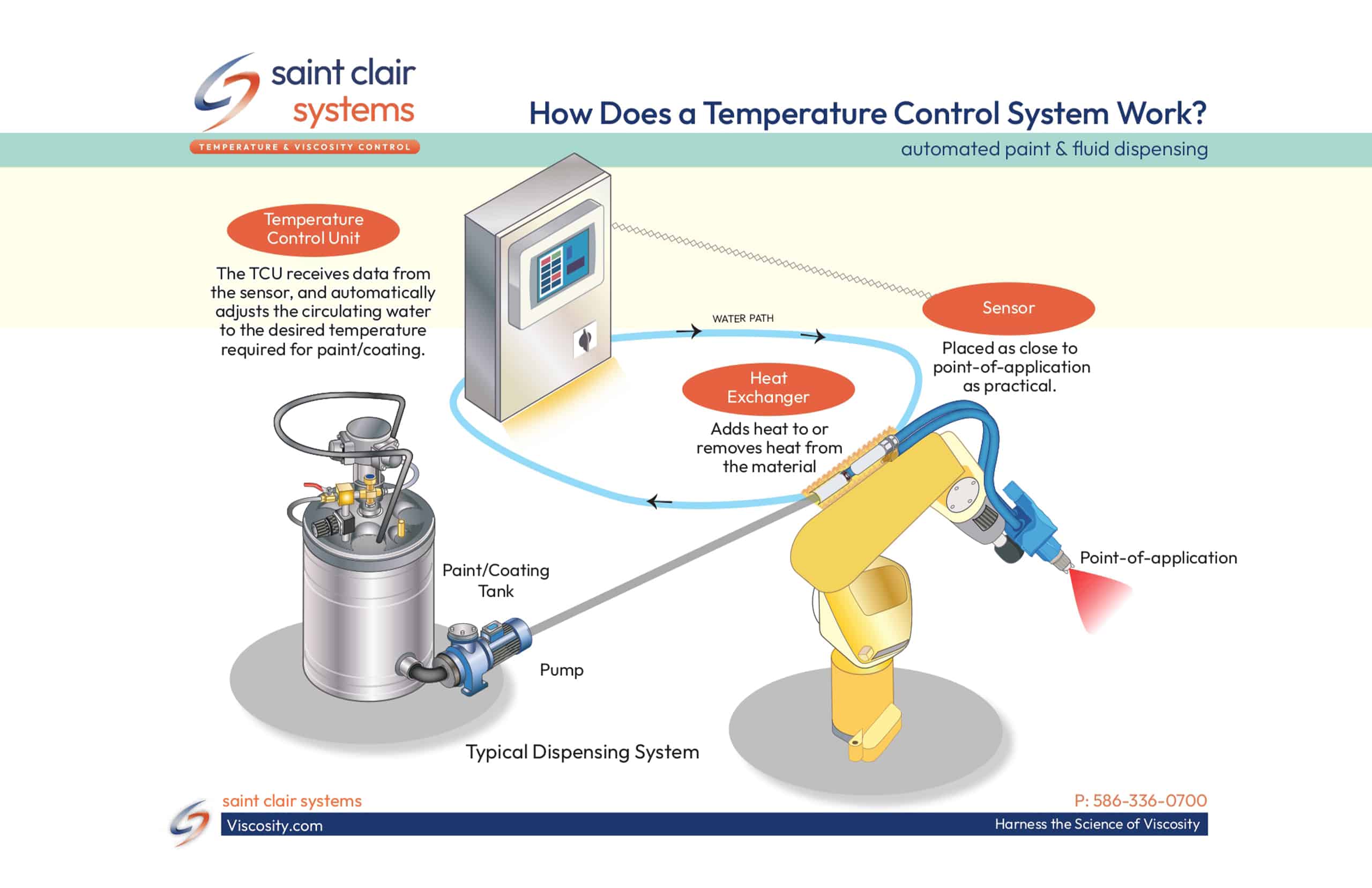
How Does a Temperature Control System Work
This diagram shows how a temperature control system works. The Sensor reads the material temperature and sends a signal to the controller. The controller signals the Temperature Control Unit to either add heat to or remove heat from the material, via the heat exchanger, as required to maintain a consistent temperature.
From our Video Library
We've gathered some of the most informative videos we've produced in order to help you optimize your process.
Monitoring Versus Controlling Viscosity
By Rob Gladstone | Video

Automated Viscosity Control Can Fill the Void
By Rob Gladstone | Video
Temperature Control System – How It Works
By Rob Gladstone | Video
Featured Content
From the Blog

Thinking of automating your paint process? Consider this.

Preparing to Automate Your Painting System? Data is the Name of the Game

Connecting the Dots: The Importance of Correlating Data Sets to Identify Root Causes
From Our Articles