


Check Out Our Blog
A great resource for improvement ideas, industry news and trends, opinions on relevant topics, and more.
- All
- Automation
- Automotive
- Blog
- Bonding & Overmolding
- Coil Coating
- Industrial Finishing
- Packaging
- Paint
- Painting
- Printing
- Robotics
- Roll Coating
- Sealant
- Sealant & Adhesive Dispensing
- Temperature Control
- Uncategorized
Why Automated Viscosity Control Requires Less Maintenance Than You Think
By Rob Gladstone | Automation, Automotive, Blog, Industrial Finishing, Paint, Painting, Roll Coating
The image of fouled sensors requiring constant attention comes from industrial instrumentation of decades past. Modern viscosity sensors are engineered specifically for paint environments with features that minimize maintenance. Most facilities complete sensor maintenance in 15-30 minutes during planned downtime or shift changes. This isn't exotic laboratory equipment requiring specialized technicians; it's robust industrial instrumentation designed for production environments.
Real-Time Adjustment Isn’t the Risk; Manual Correction Is
By Rob Gladstone | Automation, Automotive, Blog, Industrial Finishing, Paint, Painting, Roll Coating
There's a peculiar middle ground many paint operations occupy. They've invested in automated viscosity monitoring but still make manual adjustments. Operators watch real-time viscosity readings on screens, then walk to the paint kitchen to manually add solvent when needed. The reluctance to enable automatic solvent addition stems from a belief that experienced operators make better adjustment decisions than algorithms. But what happens during manual correction?

What You Can’t See Is Controlling Your Paint Process
By Scott Woodward | Automation, Automotive, Painting, Robotics
Most paint processes today are still being monitored the same way they have been for decades.
A sample gets pulled.
A cup gets filled.
A number gets written down.
Maybe that happens once a shift. Maybe a few times.
And from that, we make decisions about the entire process.

The Illusion of Manual Reliability: Why “Good Enough” Is Costing You
By Rob Gladstone | Automation, Automotive, Blog, Industrial Finishing, Paint, Painting, Roll Coating
Why fix what isn't broken? This perceived reliability of manual methods is a barrier to automation because it's rooted in partial truth. Manual methods can work. The question is whether "working" is the same as "optimal”, and whether that gap is costing you more than you realize. The comfort of familiar manual methods is a competitive liability disguised as operational stability.
Your Paint Isn’t Too Complex for Automated Viscosity Control. It’s Too Complex for Manual Control
By Rob Gladstone | Automation, Automotive, Blog, Industrial Finishing, Paint, Painting, Roll Coating
The concern about switching between different paint formulations assumes that automated systems can only handle one product at a time. Modern viscosity control systems are essentially industrial computers with recipe management software. If your paint chemistry were simple and invariant, you wouldn't need sophisticated control. It's precisely because your coatings are complex that you need automation to manage them properly.

Understanding the True ROI of Automated Viscosity Control
By Rob Gladstone | Automation, Automotive, Blog, Industrial Finishing, Paint, Painting, Roll Coating
Manual viscosity checks feel inexpensive because the costs are diffuse and largely invisible on financial statements. Consider what's actually happening: operators stop production multiple times per shift to run viscosity cup tests. Each test takes 5-10 minutes when you account for walking to the booth, running the test, making adjustments, and documenting results. Across multiple shifts and paint lines, this easily consumes 2-3 hours of labor daily.

Getting Viscosity Right: A Practical Guide for Automated Paint Operations
By Rob Gladstone | Automation, Automotive, Blog, Coil Coating, Industrial Finishing, Paint, Painting, Roll Coating, Uncategorized
Viscosity control follows a logical progression: start with monitoring, implement automated control, and only add temperature management if needed. This staged approach prevents over-engineering while ensuring you address actual problems rather than theoretical ones.
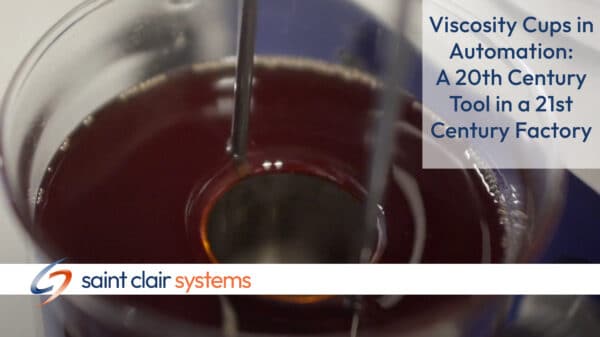
Viscosity Cups in Automation: A 20th Century Tool in a 21st Century Factory
By Rob Gladstone | Automation, Automotive, Blog, Coil Coating, Industrial Finishing, Paint, Painting, Roll Coating
Viscosity cups are the same basic technology that's been around for nearly a century. While these simple gravity-fed devices have their place, they present serious limitations when controlling material viscosity in automated painting applications.

The Top Challenges Industrial Coaters Face Today
By Scott Woodward | Automation, Automotive, Blog, Coil Coating, Industrial Finishing, Paint, Painting, Roll Coating
Rising costs, quality control, and evolving regulations are key hurdles for industrial coaters. This blog explores how automation, viscosity control, and smart investments can boost efficiency and competitiveness.
Understanding Paint Defects: The Case of Orange Peel
By Brendan Costello | Automation, Automotive, Blog, Industrial Finishing, Paint, Robotics, Temperature Control
The blog discusses orange peel, a paint defect caused by high viscosity and improper solvent addition, which prevents a smooth finish. It highlights the need to optimize viscosity and solvent use, along with proper application techniques, to achieve a defect-free coating.
The Importance of Temperature and Viscosity Control in Industrial Coating Processes
By Scott Woodward | Automation, Automotive, Blog, Industrial Finishing, Paint, Robotics, Temperature Control
Consistency in temperature and viscosity is crucial for achieving high-quality, reliable coatings. Fluctuations can lead to issues like uneven film thickness, color mismatches, and reduced performance. Implementing process control systems to stabilize these factors ensures more predictable results, less waste, and greater efficiency.

Overcoming Winter Challenges in Fluid Dispensing: How to Manage Cold-Weather Operations Effectively
By Scott Woodward | Automation, Industrial Finishing, Painting, Sealant & Adhesive Dispensing
Manufacturers who dispense coatings, sealants, adhesives, and other fluids face the unique challenge of colder temperatures. The cold can create significant complications for production processes that rely on the proper flow and application of fluids. Lower temperatures increase the viscosity of these fluids, leading to inconsistencies in application, quality issues, and potential equipment damage. So, how can manufacturers prepare for these challenges and ensure smooth, efficient operations during the colder months?
Automation is the Solution for Your Inconsistent Process Variables
By Brendan Costello | Automation, Industrial Finishing, Painting
Too often, coating operations still rely on manual adjustments to control critical factors like viscosity and solvent evaporation rates. Operators use stopwatches and flow cups to monitor viscosity, then make ad hoc adjustments as they go. This reactive, "crisis management" approach leads to unacceptable levels of process variability.

The Importance of Controlling Material Temperature When Dispensing 100% Solids UV-Cured Coatings
By Rob Gladstone | Industrial Finishing, Packaging, Paint
This blog will explore why maintaining the right temperature is important when dispensing 100% solids UV-cured coatings.

Connecting the Dots: The Importance of Correlating Data Sets to Identify Root Causes
By Scott Woodward | Automation, Automotive, Blog, Industrial Finishing, Paint, Painting, Robotics, Sealant & Adhesive Dispensing
When you can connect fluctuating temperature and changing viscosity to the actual issues in your process that are costing you (i.e., defects, scrap, rework, production downtime), you move from the hypothetical to the concrete. And you are left with key data displaying both cause and effect.

Preparing to Automate Your Painting System? Data is the Name of the Game
By Scott Woodward | Automation, Automotive, Blog, Industrial Finishing, Paint, Painting, Robotics
Automation will transform your process and strategically position you for a future driven by data. However, automating your entire system will present its own set of challenges: many processes face communication issues, misaligned interests, and difficulty balancing various factors.
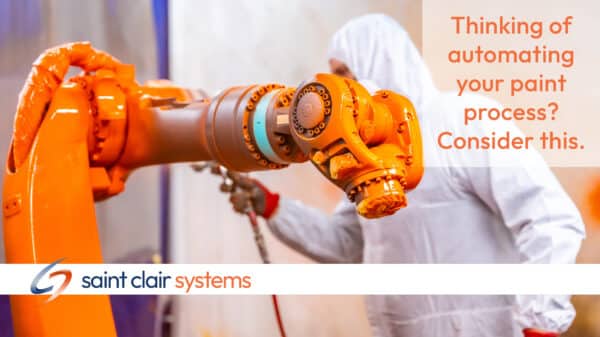
Thinking of automating your paint process? Consider this.
By Rob Gladstone | Automation, Automotive, Blog, Bonding & Overmolding, Coil Coating, Industrial Finishing, Paint, Painting, Printing, Robotics, Roll Coating, Sealant, Sealant & Adhesive Dispensing, Uncategorized
Over the past 30+ years, we have been fortunate to have been included in several migrations from manual applications to automated applications. Last month we visited an automation company, and it made me realize how much more manufacturing will become automated. It seems like as quickly as the experienced workforce is evaporating, the automation equipment...
I control plant temperature. Isn’t that enough for my dispensing application?
By Rob Gladstone | Automation, Automotive, Blog, Bonding & Overmolding, Coil Coating, Industrial Finishing, Paint, Painting, Printing, Robotics, Roll Coating, Sealant, Sealant & Adhesive Dispensing, Uncategorized
Rob Gladstone President, Saint Clair Systems View Posts Home » Blog » I control plant temperature. Isn’t that enough for my dispensing application? When we talk about point-of-application fluid temperature…
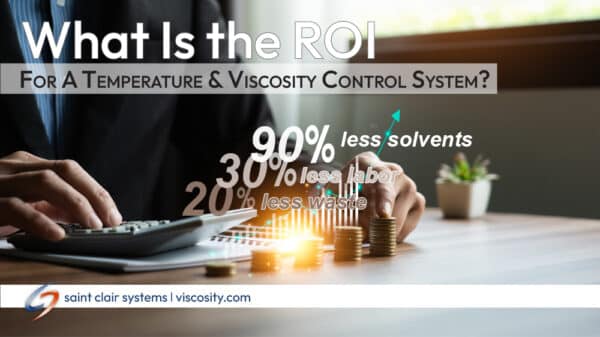
What’s the ROI for a Temperature & Viscosity Control System?
By Rob Gladstone | Automation, Automotive, Blog, Bonding & Overmolding, Coil Coating, Industrial Finishing, Paint, Painting, Printing, Robotics, Roll Coating, Sealant, Sealant & Adhesive Dispensing
Somebody asked me the other day, “What’s the payback period on your equipment?” The reality is it varies. Not only the payback period, (which averages about nine months), but the way our customers calculate it. It’s typically not just one thing. Here is a quick summary of common ways companies have been able to justify buying one of our solutions.
Viscosity Variations: Why It Matters in Your Industrial Coating Process
By Scott Woodward | Automation, Automotive, Blog, Bonding & Overmolding, Coil Coating, Industrial Finishing, Paint, Painting, Robotics
Industrial coating process operators experiencing defects should look past the fault of a material supplier's specifications and product and examine the variables that impact material environment. Solution: consider automated viscosity control.

How Does It Work?
By Mike Bonner | Blog
How temperature control systems make industrial fluid dispensing predictable and repeatable for paint, sealants and adhesives.

Five Ways to Identify if Temperature is Negatively Impacting Your Process
By Rob Gladstone | Automation, Automotive, Blog, Bonding & Overmolding, Coil Coating, Industrial Finishing, Packaging, Paint, Painting, Printing, Robotics, Roll Coating, Sealant, Sealant & Adhesive Dispensing
Saint Clair Systems' Jill Christoff shares the process of elimination used in identifying if temperature is negatively impacting your process.
A Simple Perspective on Viscosity in Industrial Fluid Dispensing Systems
By Scott Woodward | Automation, Automotive, Blog, Bonding & Overmolding, Coil Coating, Industrial Finishing, Packaging, Paint, Painting, Robotics, Sealant, Sealant & Adhesive Dispensing
A fresh perspective in understanding the importance of viscosity in industrial fluid dispensing systems.
Is Controlling Temperature in the Mix Room Enough?
By Rob Gladstone | Automation, Automotive, Blog, Bonding & Overmolding, Coil Coating, Industrial Finishing, Packaging, Paint, Painting, Printing, Robotics, Roll Coating, Sealant, Sealant & Adhesive Dispensing
Controlling temperature in the mix room is a great start, but doesn't control If intermittent quality issues like: transfer efficiency, VOC concerns, or excessive solvent usage. A fully-automated fluid dispensing operation may be needed.
Inline Heaters Versus Temperature Control Systems
By Mike Bonner | Automation, Automotive, Bonding & Overmolding, Coil Coating, Industrial Finishing, Packaging, Paint, Robotics
The differences between an inline heater and a temperature control system will make a big difference in your fluid process efficiency.
Monitoring Versus Controlling Viscosity
By Rob Gladstone | Automation, Automotive, Blog, Bonding & Overmolding, Coil Coating, Industrial Finishing, Packaging, Paint, Painting, Printing, Robotics, Roll Coating, Sealant, Sealant & Adhesive Dispensing
Monitoring Versus Controlling Viscosity Rob Gladstone President, Saint Clair Systems View Posts Home » Blog » Monitoring Versus Controlling Viscosity Video At Saint Clair Systems, we’re fortunate to be able…
Employee Loss & Recovery
By Scott Woodward | Automation, Automotive, Blog, Bonding & Overmolding, Coil Coating, Industrial Finishing, Packaging, Paint, Painting, Printing, Robotics, Roll Coating, Sealant, Sealant & Adhesive Dispensing
Will your viscosity control and fluid dispensing measuring processes retire when your most valuable employee does?

The Only Data That Matters is Yours
By Rob Gladstone | Automation, Automotive, Bonding & Overmolding, Coil Coating, Industrial Finishing, Packaging, Paint, Painting, Printing, Robotics, Roll Coating, Sealant, Sealant & Adhesive Dispensing
A Temperature Control System is essential – and so is having the right system for your unique process. We can get you there.
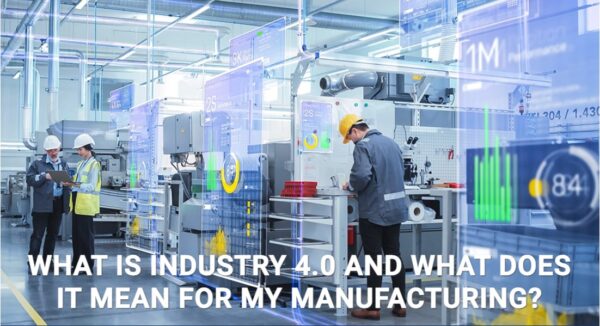
What is Industry 4.0 and What Does it Mean for My Manufacturing?
By Mike Bonner | Automation, Industrial Finishing, Robotics
Industry 4.0 refers to the rapid pace of digitization in manufacturing today. For generations, manufacturing processes and techniques have evolved and helped businesses improve their production, performance and output.

The Importance of Appearance and Rising Standards
By Rob Gladstone | Automotive, Industrial Finishing
Saint Clair Systems’ groundbreaking temperature control improves a major Tier 1 Auto Supplier’s industrial finishing process. Read about the demo here!
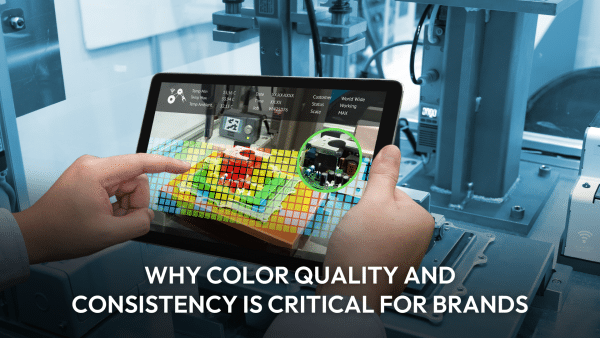
Why Color Quality and Consistency is Critical for Brands
By Rob Gladstone | Packaging, Printing
Color quality and consistency in printing is critical for brands. Saint Clair Systems discusses the importance of proper ink management. Read about it here!
Are Batch-to-Batch Paint Variations Self-Inflicted?
By Rob Gladstone | Industrial Finishing, Painting
Temperature control in your paint process reduces batch-to-batch variations and the need for solvents. Saint Clair Systems explains how to get better results!
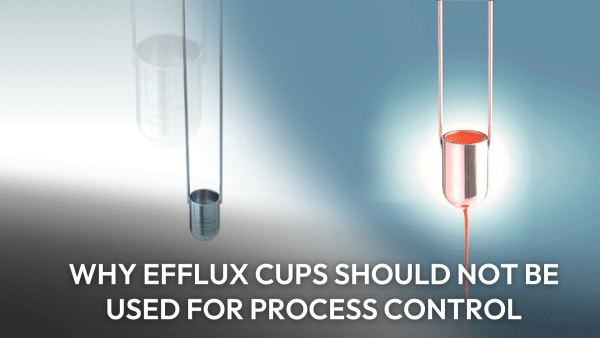
Why Efflux Cups Should Not Be Used For Process Control
By Rob Gladstone | Packaging, Printing
Saint Clair Systems explains why viscometers provide more accurate & efficient ink viscosity measurements for printing, outperforming manual devices. Learn how!
What’s the Cost If You Don’t?
By Rob Gladstone | Automotive, Industrial Finishing
Poor quality is your company’s biggest cost. Saint Clair Systems explains how temperature & viscosity control in fluid dispense provides consistent quality.
The Ultimate Guide to Flexographic Printing
By Rob Gladstone | Packaging, Printing
Saint Clair Systems explains why flexographic printing is the fastest-growing printing process in the world, is eco-friendly, and has many applications and benefits.
You’ve Seen Uneven Viscosity Before
By Rob Gladstone | Automation, Automotive, Robotics, Sealant, Sealant & Adhesive Dispensing
Saint Clair Systems’ point of application temperature and viscosity control technology produces consistent results in your sealant application. Learn more here!
Lessons Learned: Automated Robotic Painting & Dispensing
By Rob Gladstone | Automation, Automotive, Industrial Finishing, Robotics, Sealant & Adhesive Dispensing
Expert in viscosity and temperature control in fluid dispense applications discusses why automation is strongly recommended in your process. Learn why here.

When Did Rework Become Part of Your Process? – Part IV
By Mike Bonner | Automation, Automotive, Industrial Finishing, Painting, Robotics
Part IV of this series provides the most effective ways to measure, evaluate benchmarks, and eliminate rework from your manufacturing process. Learn more here.
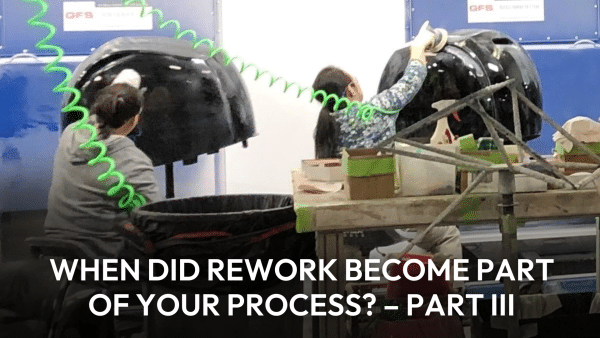
When Did Rework Become Part of Your Process? – Part III
By Mike Bonner | Coil Coating, Packaging, Sealant & Adhesive Dispensing
Part III of this series covers the relationship between temperature and viscosity and how variation can affect things like spray pattern and bead profiles.

Have you automated viscosity measurement?
By Rob Gladstone | Bonding & Overmolding, Industrial Finishing, Packaging, Printing, Sealant & Adhesive Dispensing
Are you still using a Zahn cup to measure paint viscosity? That’s akin to relying on a rotary phone. It’s time to talk about automation. Click to learn more.

Substrates & Automotive Paint: Questions To Consider
By Mike Bonner | Automotive, Bonding & Overmolding, Painting, Sealant & Adhesive Dispensing
SCS expert discusses the impact of ambient conditions on particle temperature, and ways to better evaluate and control your coating process. Learn more here.
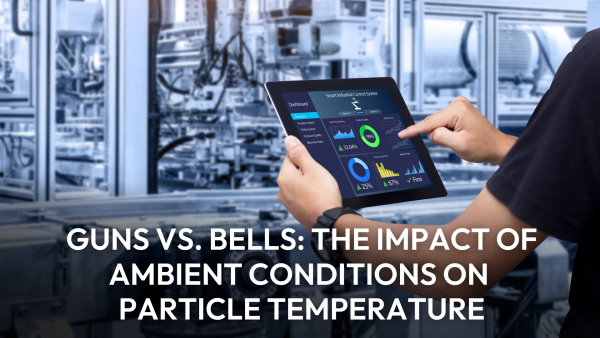
Guns vs. Bells: The Impact of Ambient Conditions on Particle Temperature
By Mike Bonner | Coil Coating, Industrial Finishing, Painting
SCS expert discusses the impact of ambient conditions on particle temperature, and ways to better evaluate and control your coating process. Learn more here.
When Did Rework Become Part of Your Process? – Part II
By Mike Bonner | Automation, Coil Coating, Packaging, Painting, Robotics, Sealant & Adhesive Dispensing
Part II of this blog series covers the forms rework can take, the loops manufacturers can get stuck in trying to manage it, and how we can move forward.
When Did Rework Become Part of Your Process? – Part I
By Mike Bonner | Automation, Automotive, Industrial Finishing, Painting, Robotics
Part 1 of this blog series discusses what rework looks like in viscosity and how fluid automation affects it.

10 Troubleshooting Tips for Gravure Printing
By Rob Gladstone | Packaging, Printing
We discuss 10 of the most common issues with gravure printing, and 10 easy solutions you can implement today.

Solvent Exposure is Linked to Memory Loss
By Rob Gladstone | Coil Coating, Industrial Finishing, Sealant & Adhesive Dispensing
Solvent reduction initiatives can reduce health risk and improve your facility’s efficiency. Three areas to improve: materials, equipment, and techniques.

Process Evaluation: What It Is & How It Can Change Your Business for the Better
By Rob Gladstone | Bonding & Overmolding, Coil Coating
How is temperature affecting your fluid dispensing process? The temperature control experts at Saint Clair Systems can evaluate your process. Learn how!
3 Ways Using Temperature Control Can Provide Instant Savings
By Mike Bonner | Automotive, Coil Coating, Industrial Finishing, Roll Coating
Solvent additives are costly and create health and environmental issues. Saint Clair Systems provides a more efficient alternative. Read about it here!

Are We Afraid to Empower Our Employees?
By Scott Woodward | Industrial Finishing, Paint
Saint Clair Systems discusses the importance of empowering the younger generation of industrial paint operators and how this will benefit your operation.