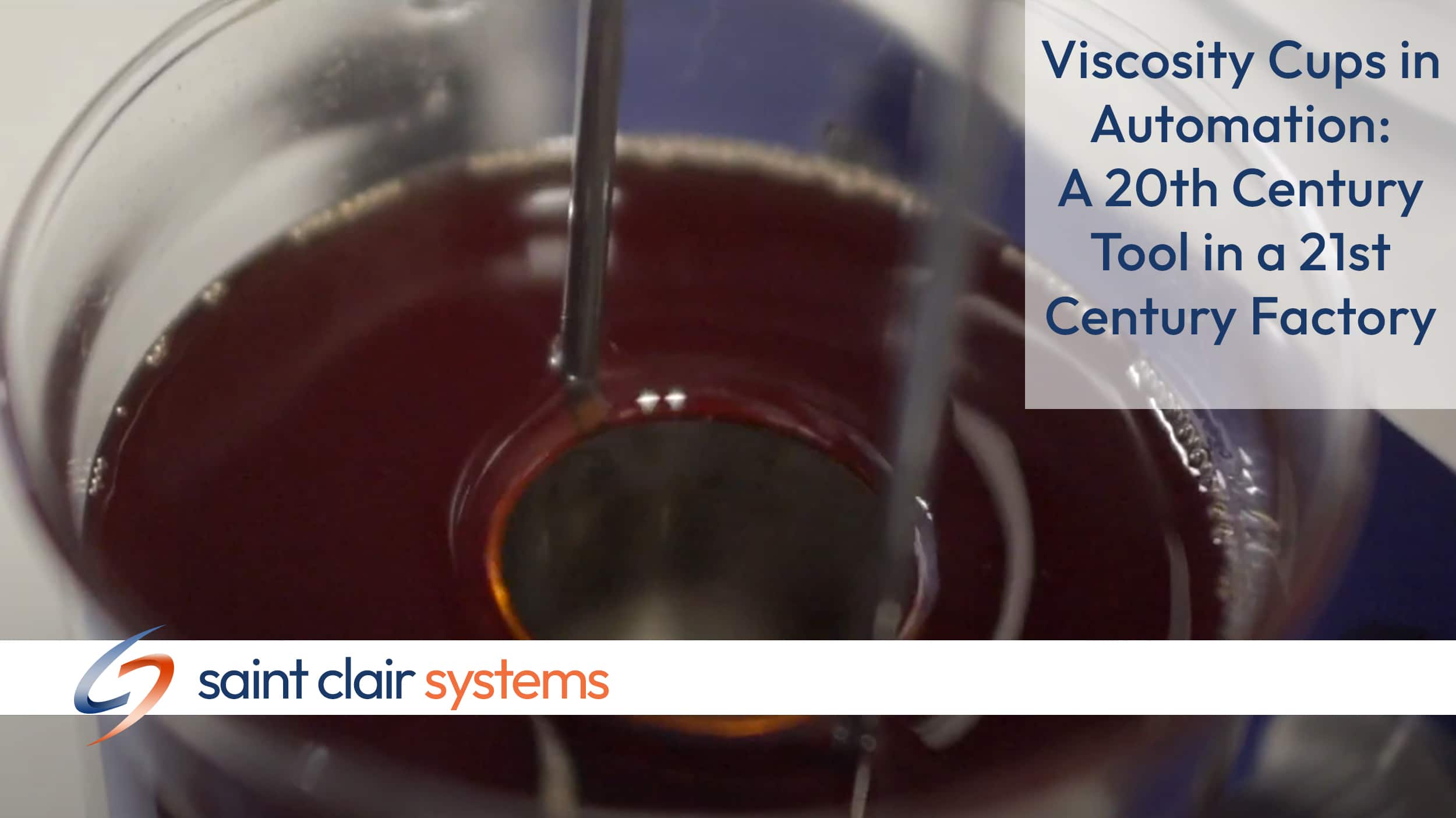

As it is what we see most commonly, I’m going to use “Zahn” to represent all viscosity or efflux cups, (i.e., Ford, DIN, ISO, etc.). This blog is about any manual cup measurement.
The Zahn Cup Problem: Five Critical Weaknesses in Automated Painting
Walk into most automated paint shops today, and you'll likely find quality control technicians religiously measuring viscosity with Zahn cups. This is the same basic technology that's been around for nearly a century. While these simple gravity-fed devices have their place, they present serious limitations when controlling material viscosity in automated painting applications. Here are the five primary weaknesses that make Zahn cups increasingly obsolete in modern production environments.
Unacceptable Time Lag Between Measurement and Correction
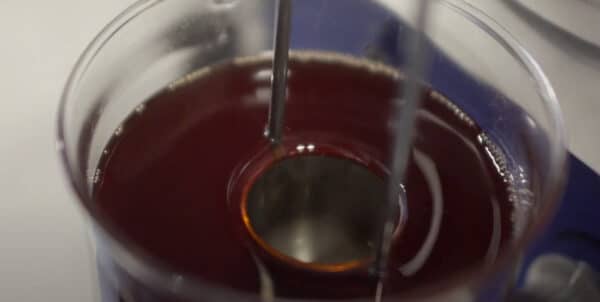
Zahn cups are fundamentally offline measurement tools. An operator must extract a sample, perform the test, analyze the result, and then adjust the paint. This entire cycle typically takes three to five minutes; an eternity in high-speed automated lines where hundreds of parts may be painted during that time. By the time corrective action is taken, you've potentially created an entire batch of defective parts. In contrast, inline viscosity monitoring systems provide real-time feedback, allowing immediate adjustments before defects occur.
Human Error and Inconsistency
Zahn cup measurements depend heavily on operator technique. Temperature control, timing precision, sample handling, and even how the operator holds the cup all introduce variables that affect results. Different operators on different shifts will produce different measurements on identical materials. This inconsistency is problematic in any quality system, but it's particularly damaging in automated environments where repeatability is paramount. One study found that inter-operator variability in Zahn cup measurements could exceed 10% among trained technicians.
Temperature Sensitivity Without Compensation
Viscosity is extremely temperature-dependent, yet standard Zahn cup testing rarely includes adequate temperature control. Most shops perform measurements at ambient temperature, which can fluctuate throughout the day and across seasons. A coating that flows perfectly at 72°F may be too thick at 65°F or too thin at 80°F. While some operators attempt to compensate using conversion charts, this adds another layer of potential error. Automated systems require precision that Zahn cups simply cannot deliver without expensive temperature-controlled environments that defeat their supposed cost advantage.
Single-Point Data in a Dynamic Process
Zahn cups provide a snapshot, a single data point representing one moment in time. But automated painting processes are dynamic. Material viscosity can drift due to solvent evaporation, temperature changes, shear effects, or settling. A viscosity reading taken every hour (or even every 30 minutes) tells you nothing about what happened between measurements. This blind spot creates risk. Modern inline viscometers provide continuous data streams that reveal trends, allowing predictive adjustments before specifications are exceeded.
Inability to Integrate with Automated Control Systems
Perhaps the most fundamental weakness is that Zahn cups cannot communicate with your automation infrastructure. The measurement is entirely manual, living in paper logbooks or spreadsheets rather than feeding directly into your control system. This disconnection prevents closed-loop control, where viscosity measurements automatically trigger dosing pumps to add solvent or thickener. It also means viscosity data isn't integrated with other process parameters for comprehensive quality monitoring. As plants move toward Industry 4.0 and smart manufacturing, Zahn cups are data dead ends.
The Path Forward
None of this means Zahn cups should be discarded entirely. They remain useful for incoming material inspection, laboratory work, and troubleshooting. However, relying on them as the primary viscosity control method in automated painting operations is increasingly indefensible. The combination of time lag, human variability, temperature sensitivity, sparse data, and inability to integrate with control systems creates quality risks and inefficiencies that modern inline viscosity measurement systems can eliminate.
The question isn't whether Zahn cups work, they do, within their limitations. The question is whether your automated operation can afford those limitations.
Helpful Links & Resources